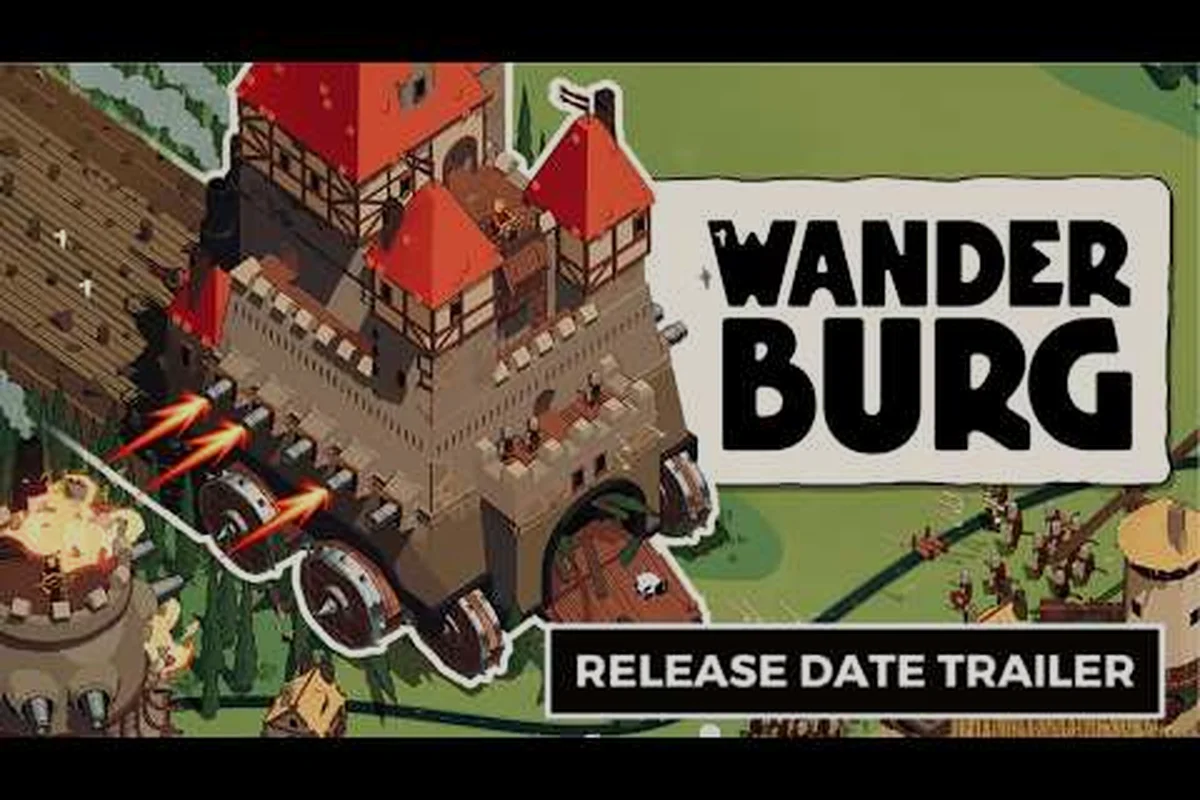
Wanderburg rolls into Early Access on September 8, 2026, and preparation matters more than ever. According to the official Steam page, this minimalist medieval roguelike puts you in control of a castle on wheels that devours villages, builds a modular siege arsenal, and grows stronger with every stronghold you crush. Getting the launch day timing right, knowing what carries between runs, and mapping out your first hours is the difference between a smooth first run and a frustrating restart. This guide delivers the complete launch day prep every beginner needs before the servers go live.
Wanderburg Early Access Launch Times and Pre-Launch Checklist
The September 8 Early Access launch follows a staggered global release schedule confirmed by the official Steam news announcement. Players on the west coast of North America see it first, with the rollout completing in Sydney roughly seventeen hours later. Knowing your local unlock window means you can arrange to be at your desk when the game goes live, especially if you're chasing the first achievement unlocks or planning to stream the launch.
| Region | City | Local Launch Time |
|---|---|---|
| Americas | Los Angeles | 6:00 AM PDT |
| Americas | New York | 9:00 AM EDT |
| Europe | London | 2:00 PM BST |
| Europe | Berlin / Paris | 3:00 PM CEST |
| Asia | Tokyo | 10:00 PM JST |
| Oceania | Sydney | 11:00 PM AEST |
Before launch, run through this pre-flight checklist to avoid preventable friction: verify your Steam region matches the scheduled unlock window so the client doesn't hand you a placeholder storefront, confirm your payment method has no holds that could stall a same-day Wanderburg purchase, and pre-stage any cloud-save clients (Steam Cloud or a third-party sync) because Early Access patches during week one have a habit of forcing a client re-auth right when the EU servers flip live at 3:00 PM CEST.
-
Wishlist the game on Steam so you get the download started the moment Early Access unlocks; the client will pre-load if you opted in
-
Verify your hardware meets minimum specs; a mouse, keyboard, or controller all work natively according to the store description, but a stable connection helps with cloud saves
-
Join the official community channels so you receive patch notes and hotfix alerts; the Wanderburg Release Date Reveal Trailer confirmed the September 8 date during its August premiere
-
Clear at least 8 GB of disk space for the base install plus a buffer for the first week of patches
Players who set up everything the night before consistently report smoother launch sessions, especially during peak server hours when login queues can spike. Treat the first hour like a raid night: prep your snacks, your settings, and your input device before the timer hits zero.
Core Mechanics Every Beginner Should Know Before Launch
Wanderburg's core loop is a modular progression roguelike, and the castle on wheels is the centerpiece of every decision. The official store page describes a system where you devour entire villages, build a modular arsenal of siege machinery, and expand your moving fortress with new modules and structures as you roll through different biomes across multiple difficulty levels.
What Drives the Run Loop
Each run in this wanderburg roguelike guide follows a strict Roll → Devour → Expand cadence, and you'll cycle through it dozens of times during Early Access, so learning when to commit resources versus hoard Biome Tokens is the single biggest pacing skill for wanderburg beginners. A concrete example: if you burn all your Scrap Metal during the Expand Phase of biome two, you'll hit the next Devour Phase with under-leveled Siege Modules, and the stronghold's weak points will shrug off your attacks, costing you the bonus loot that funds future expansions. Think of each phase as a budget window — Roll sets the difficulty tax, Devour is your income statement, and Expand is where wanderburg starting tips actually convert that income into permanent castle upgrades that compound across the entire run.
| Phase | Primary Action | Key Resource |
|---|---|---|
| Roll | Navigate your castle through the biome | Biome Tokens |
| Devour | Crush a village stronghold | Siege Modules |
| Expand | Add structures and upgrade modules | Scrap Metal |
The Rolling Phase determines which biomes and difficulty modifiers you face. Higher-difficulty biomes reward better scrap but introduce tougher enemy compositions. The Devour Phase is where the castle's modular arsenal earns its keep; each stronghold has weak points that certain siege modules exploit for bonus rewards. The Expand Phase is the meta-progression window where you decide which new structures to bolt onto your moving fortress before the next biome.
What Carries Between Runs
Early Access progression is split into two distinct pools: per-run unlocks that reset every attempt, and persistent meta-unlocks that accumulate in your account-wide profile. According to the Steam store description, unlockable vehicles, artifacts, and captains carry over between runs, widening your strategic options with every cycle. Scrap, in contrast, is consumed inside a single run and contributes to your run score, not your account.
| Progression Type | Resets? | Examples |
|---|---|---|
| Persistent Meta-Unlocks | No | New vehicles, artifacts, captains |
| Per-Run Progression | Yes | Scrap metal, temporary siege modules |
| Account Stats | No | Total villages devoured, best run distance |
The distinction matters because beginners who spend scrap on permanent-style upgrades will hit a soft wall when the run ends. Spend per-run resources aggressively, then pour your meta-progression into the vehicle and captain unlocks that fit your playstyle. For a deep dive on which captain to prioritize, our captain unlock guide breaks down the unlock requirements for every starting option.
Wanderburg Starting Tips for Your First Three Runs
Your first three runs in Early Access are a learning tax, and the smartest play is to minimize the cost of that tax. Community data from the demo phase suggests that new players who fixate on winning the first run spend twice as many total hours reaching their first meta-milestone compared to players who treat the first runs as reconnaissance. The trick is to set a small, measurable goal for each attempt instead of chasing the victory screen.
Run One: Learn the Movement Model
Spend your entire first run mastering the rolling movement of your castle. The vehicle handles differently from any standard top-down or twin-stick game, and muscle memory for the braking distance, turn radius, and momentum transfer is something you cannot learn from reading. Pick the flattest biome available, avoid combat unless a village is directly in your path, and end the run by deliberately ramming the smallest enemy formation you can find. The goal is zero villages devoured and a complete map of the movement envelope.
| Focus Area | Target Outcome | Time Budget |
|---|---|---|
| Braking distance | Stop within one castle length | 15 minutes |
| Turn radius | Complete a 180° without losing momentum | 15 minutes |
| Momentum transfer | Chain two ram attacks on a single target | 20 minutes |
Run Two: Test a Single Siege Module
Pick one siege module and learn its damage profile, range, reload, and best target type before adding anything else. Beginners who try to build a full arsenal on run two end the run with a half-levelled roster that cannot deal with the third biome. The catapult, ballista, and battering ram each have a distinct niche, and learning one at a time lets you understand the synergies you'll exploit later. After you have a feel for the chosen module, devour two to three villages and end the run.
Run Three: Your First Real Attempt
By run three, combine the movement model from run one with the module mastery from run two, and add a single captain passive to the mix. Captains unlock across runs and contribute passive buffs; choosing the best captain for beginners early accelerates your meta-progression because their bonuses stack across attempts. Aim to clear two full biomes and devour at least five villages before you let the run end, either by choice or by defeat.
Castle on Wheels Build Priorities for Early Access
The modular progression system described on the official store page expands your moving fortress with new siege modules and structures as you unlock them. During Early Access, that progression pool is smaller than the eventual 1.0 release, which means build optimization is about choosing the right subset of available modules rather than chasing every unlock. Here is how to prioritize your early build slots.
Vehicle Choice Comes First
The vehicle you drive determines the base stats for speed, armor, and module capacity, so picking a vehicle that matches your preferred playstyle is the single highest-leverage decision you make outside of a run. Vehicles in Wanderburg come in three broad archetypes, each favoring a different approach to the biome grind.
| Vehicle Archetype | Strength | Weakness | Best For |
|---|---|---|---|
| Heavy Hauler | High module capacity, strong armor | Slow turn, long braking | Siege-focused players |
| Scout Chassis | Fast, agile, high map mobility | Low module capacity, fragile | Hit-and-run players |
| Balanced Frame | Middle-ground stats across the board | No standout strength | Beginners still finding their style |
Before you commit to a Heavy Hauler, Scout Chassis, or Balanced Frame, it's worth cross-referencing your pick against the full vehicle roster in our vehicle unlock guide, where every unlockable chassis is broken down by top speed, module capacity, armor rating, and the specific biome milestones or crafting recipes required to add it to your garage. That page is especially useful in early access, since several mid-tier vehicles are gated behind outpost upgrades rather than raw biome progression, meaning a player who rushes a Scout for speed can unknowingly lock themselves out of a Balanced Frame sidegrade for another two or three runs. Treat the roster table as a decision tree, not a shopping list.
Module Slots and Your Combat Identity
Once you have a vehicle, your module slots define your combat identity. The Early Access module pool includes the catapult, ballista, battering ram, spike board, and flamethrower rig, plus a handful of utility modules that boost scrap yield or repair speed. A balanced loadout covers three roles: long-range pressure (catapult or ballista), close-range burst (battering ram or spike board), and utility (scrap booster or auto-repair). Dropping any of these three roles leaves a gap that the third biome will exploit.
| Slot | Recommended Module | Role |
|---|---|---|
| 1 | Catapult | Long-range pressure |
| 2 | Battering Ram | Close-range burst |
| 3 | Scrap Booster | Economy utility |
| 4 | Auto-Repair | Survivability utility |
Swapping the Scrap Booster for the Flamethrower Rig is a strong alternative for players who prefer aggressive close-range clears, but the economy loss will slow your meta-progression in the first ten hours. Players chasing the best vehicle for castle building builds will want at least one utility slot reserved for the Scrap Booster until the meta-progression curve flattens.
Wanderburg Roguelike Guide: Difficulty, Biomes, and Progression Pacing
The biome system in Wanderburg rolls through different environments at multiple difficulty levels, and the pacing of your progression is determined as much by your biome choices as by your module upgrades. Higher-difficulty biomes drop better scrap and unlock tougher meta-progression tiers, but the enemy density and stronghold HP scale to match.
Tiered Difficulty Across the Regions
Early Access features four biome tiers, each gated behind a minimum number of devoured villages. The gating means you cannot stumble into the hardest content before your meta-progression supports it, which is friendly to new players learning the castle on wheels game guide fundamentals.
| Tier | Biome | Unlock Requirement | Difficulty Modifier |
|---|---|---|---|
| 1 | Greenfield Plains | None | 1.0× |
| 2 | Ashen Wastes | 8 villages | 1.3× |
| 3 | Frostmarch Ridge | 20 villages | 1.6× |
| 4 | Crimson Hollow | 40 villages | 2.0× |
The Crimson Hollow tier is the current Early Access endgame, and reaching it requires sustained meta-progression across vehicles, captains, and artifacts. Treat the first three tiers as a tutorial curve, and use them to bank the meta-unlocks that carry over between runs.
Progression Pacing Strategy
A common mistake during Early Access is to over-invest in a single biome tier, grinding it for incremental upgrades instead of pushing forward. The data from the demo phase showed that players who pushed to a new biome tier every three to five runs reached the meta-milestones roughly 30% faster than players who stayed in their comfort zone. The reason is simple: each new tier unlocks new modules, new vehicles, and new captain options, and those unlocks snowball your capability faster than grinding a single tier ever could.
| Strategy | Short-Term Gain | Long-Term Cost |
|---|---|---|
| Grind a single tier | Steady scrap, low risk | Slow meta-unlocks, boredom |
| Push every 3-5 runs | Fast meta-progression | Higher run failure rate |
| Hybrid: clear tier 1 fully, then push | Balanced | Requires discipline |
The hybrid approach is what most successful Early Access players settle into after the first ten hours. Clear Greenfield Plains until you have a comfortable module roster, then commit to pushing a new tier every four runs. The meta-unlocks compound, and the failure rate drops as your vehicle and captain upgrades catch up to the difficulty curve.
Launch Day Day-One Goals and Meta-Milestones
Setting concrete goals for the first session turns launch day chaos into a structured checklist. Without goals, the first two hours evaporate into menu navigation and biome exploration with nothing to show for the time invested. Below is a realistic day-one target list that respects the Early Access content scope.
| Hour | Goal | Success Metric |
|---|---|---|
| 0–1 | First full run | Reach the Ashen Wastes biome |
| 1–2 | Meta-unlock #1 | Unlock a second vehicle |
| 2–3 | First captain unlock | Have a captain at Level 2 |
| 3–4 | First artifact | Equip an artifact with a passive bonus |
| 4–5 | Reach Frostmarch Ridge | Clear at least one Frostmarch village |
If you hit all five milestones in your first session, you are on pace for the Early Access community average reported in the first post-launch week. Missing one or two is normal, especially if the servers are unstable or the build ships with a known bug. Don't burn the entire launch night chasing a single milestone; the meta-progression system rewards consistency over intensity, and a steady daily hour beats a single six-hour grind session every time.
Early Access Pitfalls from the Demo Playtests
Every Early Access launch has a learning cliff, and Wanderburg is no exception. Based on the demo playtests and the mechanics confirmed on the official Wanderburg page on Steam, here are the pitfalls that catch the most beginners in the first ten hours.
| Pitfall | Symptom | Fix |
|---|---|---|
| Spending scrap on cosmetic modules | Run ends with low combat power | Reserve scrap for the three-role loadout |
| Ignoring biome difficulty gates | Hit a wall in Ashen Wastes | Push to higher tiers every 3-5 runs |
| Skipping captain progression | Slow meta-growth | Level at least one captain every session |
| Over-specializing one module | Vulnerable to mixed enemy types | Maintain long-range + close-range + utility |
| Hoarding meta-currency | No unlocks by hour five | Spend small amounts every run |
The captain progression pitfall is the most common, because the captain system is easy to overlook when the castle on wheels is the star of the show. Captains provide passive bonuses that stack across runs, and neglecting them is like ignoring your equipment in a traditional RPG. For a full breakdown of how to level captains efficiently, our captain unlock guide covers the unlock paths and the best early picks for new players.
Frequently Asked Questions
What time does Wanderburg Early Access launch on September 8, 2026?
Wanderburg unlocks at 6:00 AM PDT in Los Angeles, which translates to 9:00 AM EDT in New York, 2:00 PM BST in London, 3:00 PM CEST in Berlin, 10:00 PM JST in Tokyo, and 11:00 PM AEST in Sydney, according to the official Steam news post. Pick the time zone closest to your region and plan to be online at the listed hour for the smoothest launch session.
Is Wanderburg a roguelike and what carries between runs?
Yes, Wanderburg is a minimalist medieval roguelike where you drive a castle on wheels through biomes and devour villages. Vehicles, artifacts, and captains persist between runs as meta-progression, while scrap metal and temporary siege modules reset every attempt, so spend per-run resources aggressively and bank your meta-unlocks for long-term growth.
What is the best starting vehicle for Wanderburg beginners?
The Balanced Frame is the strongest beginner vehicle because its middle-ground stats across speed, armor, and module capacity forgive the mistakes new players make while learning the rolling movement model. Once you understand your preferred playstyle, switch to the Heavy Hauler for siege builds or the Scout Chassis for hit-and-run runs to specialize your meta-progression.
How many biomes are in Wanderburg Early Access?
Early Access launches with four biome tiers: Greenfield Plains, Ashen Wastes, Frostmarch Ridge, and Crimson Hollow, each gated by a minimum number of devoured villages. The tiers scale from 1.0× to 2.0× difficulty, with the highest tier serving as the current Early Access endgame and rewarding the best meta-unlocks for persistent players.
Can I play Wanderburg with a controller on launch day?
Yes, the official Steam page confirms that Wanderburg is fully playable with mouse, keyboard, or controller from day one. The control scheme adapts automatically based on your last input, so you can switch between devices mid-session without restarting the game or losing your run progress.